Quick Answer
Commercial movers are trained, insured, and equipped for the realities of office buildings that residential crews aren't: secured docks, elevator reservations, modular furniture, IT equipment, and after-hours access windows. Hiring the wrong type of mover for an occupied office, medical floor, or corporate campus risks downtime, damaged equipment, and building-access violations, not just a slower move. In Columbus, the right commercial partner keeps a business operating through the move, not just moving its stuff.
If you're relocating an office, a medical floor, a bank branch, or a corporate campus in Central Ohio, the question isn't really whether to hire commercial movers. It's what happens when you don't.
What actually makes a mover "commercial"?
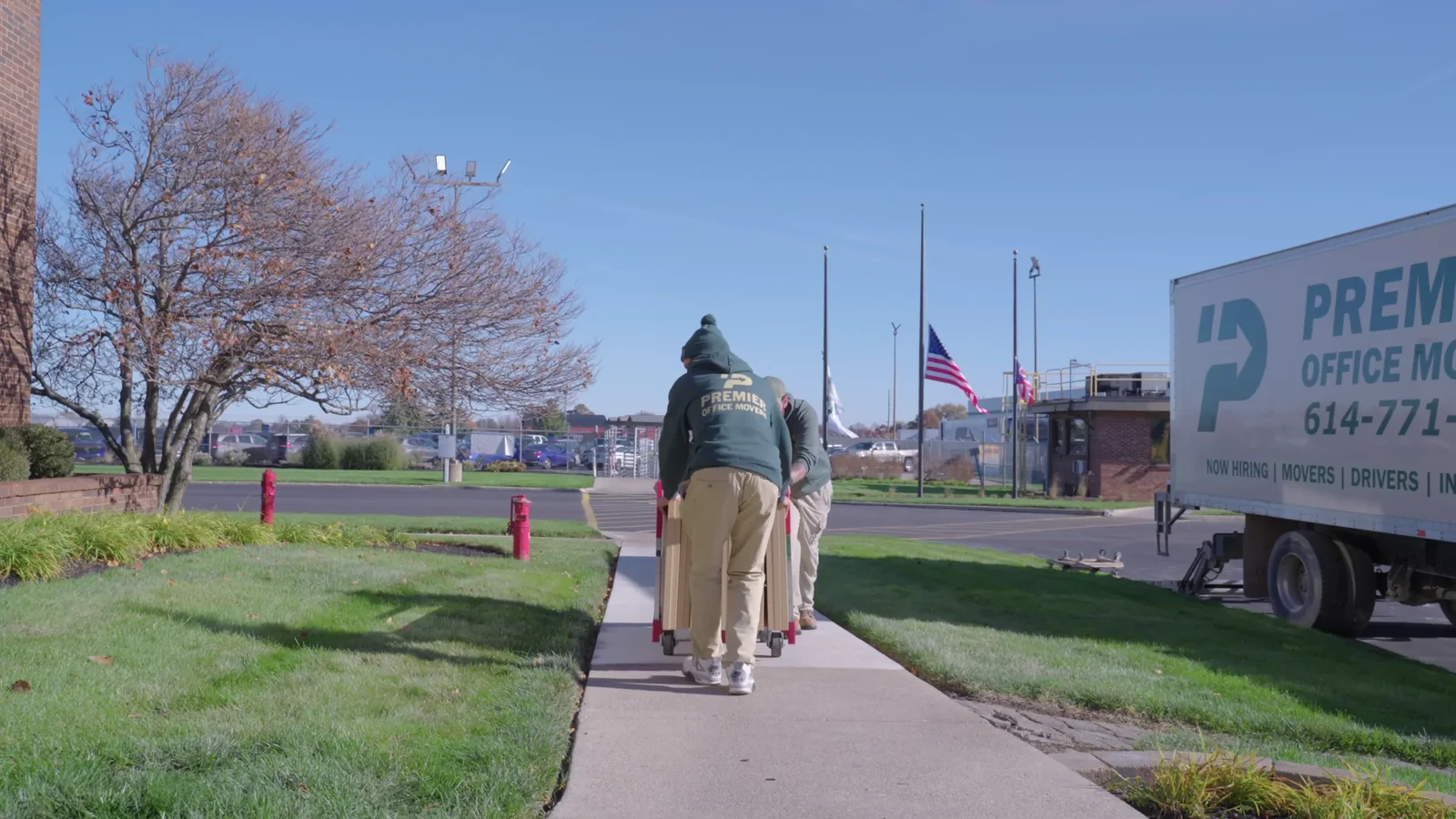
Commercial movers specialize in workplace relocations — the kind that happen on nights and weekends, inside occupied buildings, under strict security, on deadlines that don't move. Practically, that looks like:
- Crews trained on modular furniture systems, server racks, lateral file banks, and sensitive or specialized equipment
- Insurance and Certificates of Insurance (COIs) sized for commercial property and high-value assets — not household goods
- Protocols for badging, dock scheduling, freight elevator reservations, and after-hours building access
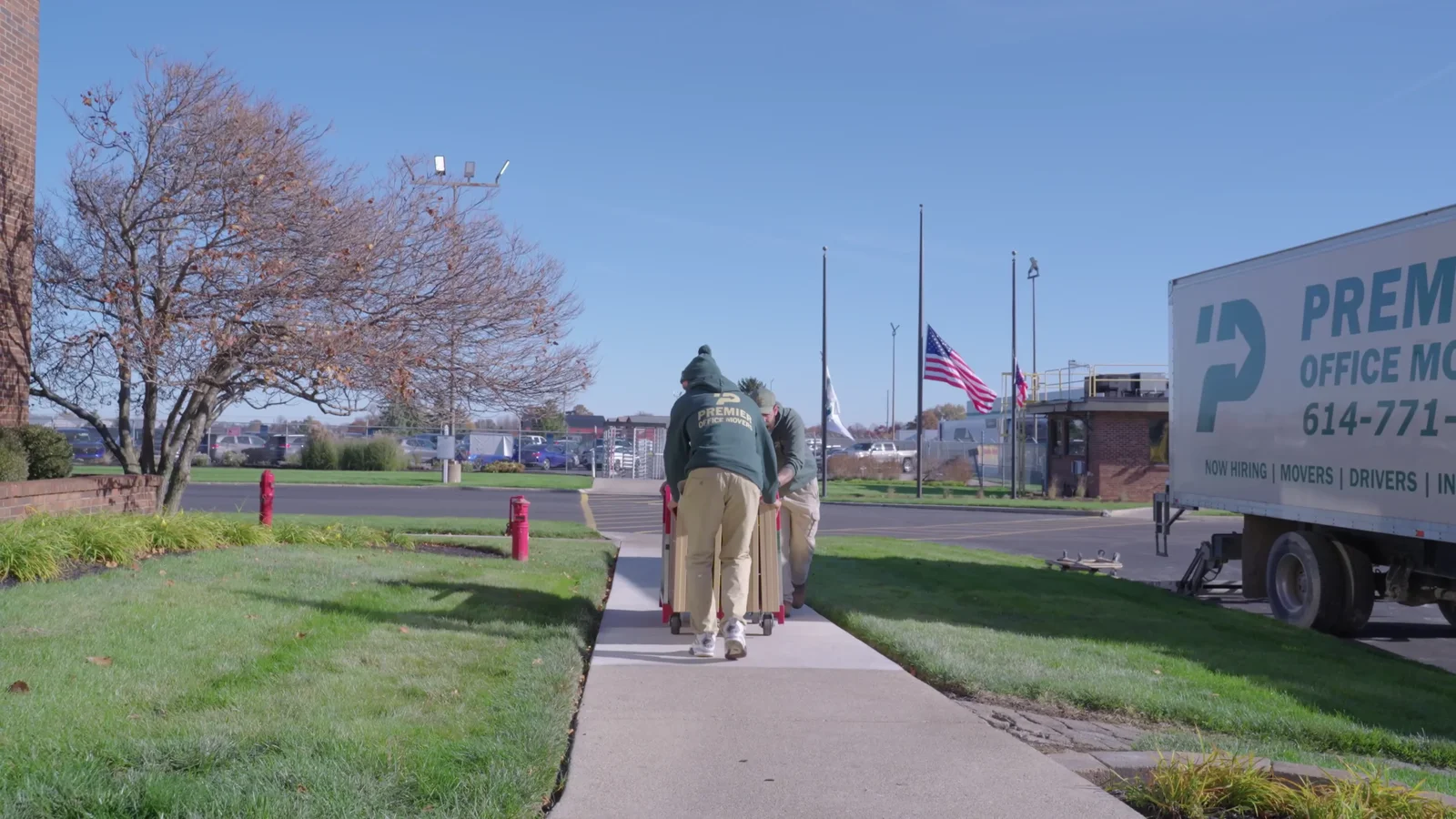
- Uniformed, background-checked, drug-tested team members who follow building policies as closely as your own staff
- Project management for phased moves, decant storage, and "Moves, Adds, and Changes" (MAC) work over multi-week campus transitions
A residential crew might move a dozen apartments a week. A commercial crew moves your building — and knows why that's different.
Why it matters more in Columbus
Every building downtown has quirks. Parking on High Street. Elevator reservations near the Arena District. Dock windows along the Scioto Mile. Tenant association rules for after-hours work in Easton, Dublin, and Polaris. A crew showing up without that knowledge burns two hours figuring it out, and you spend the rest of the day catching up.
Central Ohio also has an unusual concentration of employers who can't absorb downtime: healthcare systems, research universities, banks and credit unions, insurance headquarters, stadium and event venues, and growing tech companies riding the Intel wave. If you're a director of facilities, operations, or real estate at any of those, "the mover figured it out on the fly" is not an acceptable outcome.
The real cost of hiring the wrong mover
Most bad commercial moves don't end in a disaster story. They end in a thousand paper cuts:
- A crew that hasn't badged into your building holds up a dock for two hours
- Modular panels are reinstalled incorrectly and have to be re-worked the following weekend
- A monitor is dropped and the mover's insurance only covers replacement — not the two days of downtime behind it
- The moving supervisor is swapped halfway through and the new one re-asks every question
- A weekend cutover bleeds into Monday, and half your team is working from a couch
The cheapest bid usually costs the most when you add up the Monday-morning recovery. A serious commercial mover is a risk-reduction purchase, not a commodity line item.
What a real commercial mover looks like in Columbus
A legitimate commercial moving partner shows up with:
- A detailed pre-move walkthrough. Every dock, every elevator, every badge, every curveball documented on paper before move day — not discovered on move day.
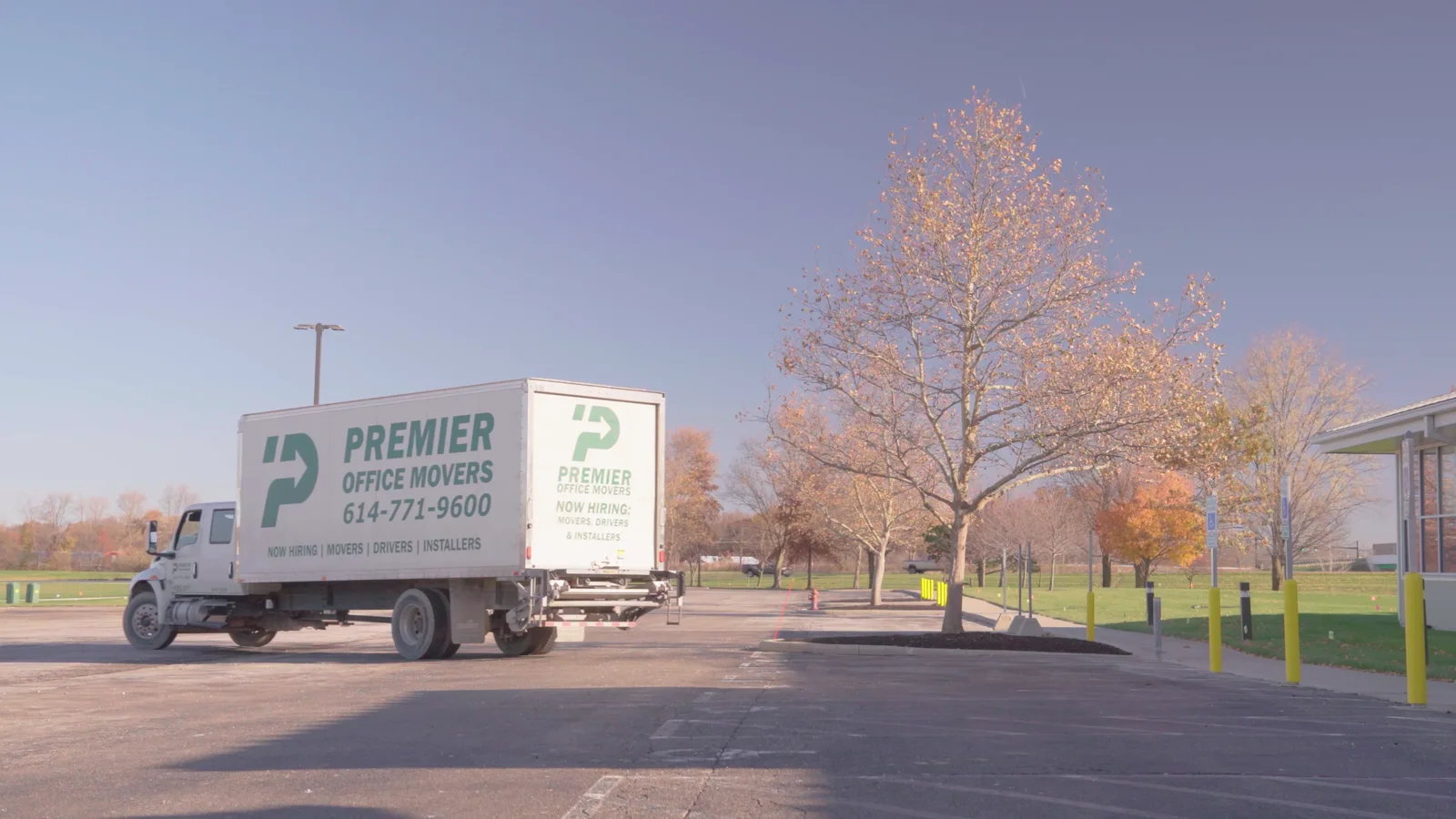
- Consistent crews. The same supervisor and core team across multi-phase projects, so you're not re-explaining the basics. At Premier Office Movers, our turnover is under 5%, which is why facility managers see the same faces job after job.
- A real person on the phone. Not a regional call center. Not a phone tree. When timelines shift — and they do — you talk to someone who can actually adjust.
- Industry-appropriate protocols. HIPAA awareness around patient-facing healthcare spaces. Security procedures for financial institutions. Student-calendar sensitivity for universities. Event blackout awareness for stadiums and convention facilities.
- Post-move support. Punch lists handled inside the original scope — not billed as a second project.
Our damage-free move rate is 98% across thousands of jobs, and every team member is uniformed, background-checked, and drug-tested before they ever step into your building. That's the baseline. If your current provider doesn't clear it, that's worth knowing.
When to start looking
If your move is in the next 90 days, start today. For a full-floor, multi-building, or phased project, four to six weeks of planning is the floor — not the ceiling. The best commercial movers in Columbus are already booked on nights and weekends through most of the quarter, which is another reason the lowest bid tends to come from whoever has an empty schedule.
Ready for a move that doesn't end up in a Monday meeting?
If you're planning a commercial move anywhere in Central Ohio, we'd rather walk your space than write you another proposal from a template. Schedule a walkthrough with Premier Office Movers — Columbus-based, commercial-only, and ready when you are.