The short answer: yes, and it matters how
Commercial movers fall into three groups when it comes to storage:
- No storage. They'll pick up and drop off, but everything they touch has to go directly from origin to destination. Fine for simple moves. A limitation for anything phased, renovation-driven, or timeline-flexible.
- Third-party storage. They subcontract to a warehouse partner. It works, but adds a handoff, a separate bill, and usually reduces inventory visibility.
- Owned warehouse. The mover runs their own commercial storage facility. Inventory is tracked, access is controlled, and the team moving your stuff is the team storing it.
For enterprise and institutional moves in Central Ohio, option three is what you want. Not because the other options can't work, but because storage that's integrated with your move project removes an entire class of coordination problems.
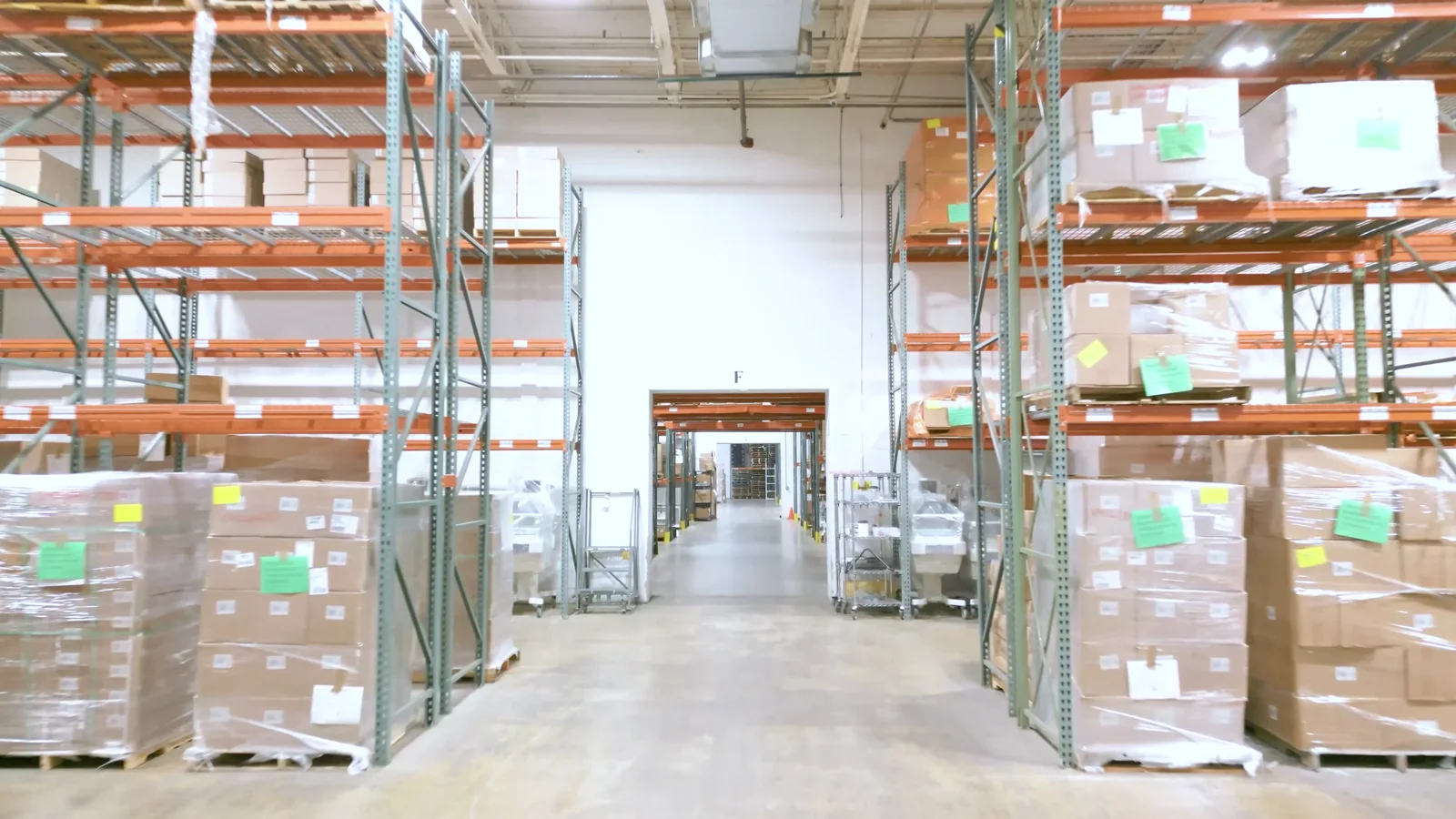
At Premier Office Movers, storage is run out of our own Columbus warehouse, by the same operations team that handles your moves — which is why it shows up as a unified project, not two vendors trying to align.
Short-term decant storage
"Decant" is industry shorthand for pulling everything out of a space temporarily so something else can happen there — a renovation, a construction phase, a buildout, an HVAC project — and then putting it back. Short-term decant storage is what makes phased moves and in-place renovations possible.
Typical scenarios:
- Floor-by-floor renovations that require each floor to be vacated, stored, and restocked
- Construction phasing where furniture has to come out of a space for a few days or weeks
- Department relocations that span a weekend — furniture out Friday, in Sunday night
- New building openings where furniture arrives before the space is ready
- Asbestos abatement, flooring, or ceiling work that requires an empty room
Short-term decant storage is priced by duration and volume. Integrated decant with your mover is usually faster and cleaner than using a separate storage vendor, because the crew that wrapped and labeled it is the crew that's putting it back.
Long-term commercial storage
Longer holds — weeks to months or more — serve different needs:
- Surplus furniture held during office downsizing or consolidation
- Modular furniture stored between deployments as teams grow or shift
- Equipment held during extended construction or buildout timelines
- Inventory for seasonal or event-driven spaces (stadiums, convention facilities, university housing)
- Backup stock of workstation components for ongoing MAC work
Long-term storage requires a real warehouse — climate control for sensitive items, secure access, organized racking, and inventory tracking. Self-storage units aren't the same thing; they lack the access and accountability commercial buildings require.
Staging for buildouts and new space openings
Storage also plays a role on the front end of a project, not just the middle. Furniture and equipment frequently arrive before a space is ready — from manufacturers, from an old office being consolidated, from a surplus that's being redeployed. A commercial mover with warehouse space can:
- Receive shipments directly from furniture and equipment manufacturers
- Inspect, inventory, and organize inbound deliveries
- Stage everything for a coordinated install once the space is ready
- Deliver and install in a single scheduled window
This is especially valuable for new building openings, where multiple vendors are converging on a compressed timeline. Staging through your mover's warehouse reduces the chaos of receiving at the site.
What to look for in a commercial storage partner
When evaluating a commercial mover's storage offering in Columbus, verify:
- Secure facility. Controlled access, alarm systems, monitoring, and a professional staff — not a general self-storage operation.
- Climate considerations. Humidity and temperature control for furniture, electronics, art, and sensitive equipment.
- Inventory tracking. Real documentation of what's in, where it's located, and what state it's in. A tracking system the client can actually reference.
- Insurance. Coverage extends into storage, not just transit. Verify limits and what's covered.
- Handling protocols. The same protective wrapping, padding, and labeling standards that apply to the move also apply to what's stored.
- Accessibility. If you need something pulled out mid-storage, how fast can they retrieve it, and what does that cost?
- Integration with moves. Can they deliver stored items directly into a new install, or are you back to square one when you want it out?
A commercial mover whose storage is organized, tracked, and insured can handle most commercial storage needs without you shopping around.
How storage integrates with a move project
On a well-run move project, storage isn't a separate conversation. It's woven in from the start. A typical project might flow like this:
- Walkthrough and scope. Identify what moves directly, what decants, what goes into long-term storage, and what gets surplussed or donated.
- Labeling and inventory. Everything is tagged on the way out, with clear destination codes (room, floor, storage, disposal).
- Transport and storage. Items route to their destinations — some direct to the new space, some to the warehouse with specific retrieval dates tied to the project timeline.
- Retrieval and delivery. Stored items pull out on schedule and land where they're supposed to, on the date the install requires.
- Punch list and reconciliation. Inventory is reconciled so nothing is unaccounted for, and any ongoing storage has a clear hand-off to a long-term plan.
When the mover and the warehouse are the same team, this flow is seamless. When they're different vendors, you're managing two projects.
Why it matters in Columbus
Central Ohio's commercial buyers lean heavily on integrated storage — healthcare systems managing phased renovations, universities rotating furniture between buildings, financial institutions consolidating or expanding branches, corporate campuses running continuous MAC work. A commercial mover without a real warehouse leaves too many of those projects unserved.
At Premier Office Movers, storage is run out of our own Columbus warehouse with full inventory tracking, secure access, and the same crews who handle the moves. Your supervisor knows where your stuff is, can pull it when you need it, and can reconcile it back into a project without a handoff.
Ready to talk storage as part of your next project?
If you're planning a move that includes a renovation, a phased cutover, or a buildout, storage should be part of the conversation from day one. Schedule a walkthrough with Premier Office Movers, or learn more about our commercial storage services.