If you've ever Googled "movers Columbus" and come up with a mixed bag of household movers, office specialists, and national freight carriers, you've run into the core confusion in our industry: the words commercial, office, and residential get used interchangeably, and they shouldn't be. Here's how they actually break down.
The quick answer
- Residential movers move households. Homes, apartments, condos, dorms. Their insurance, equipment, training, and scheduling are built around household goods.
- Commercial movers move businesses. That's the broader category — it covers office moves, industrial relocations, warehouse transfers, retail buildouts, laboratory equipment, and more.
- Office movers are commercial movers focused specifically on workplace environments: corporate offices, medical floors, bank branches, university buildings, insurance HQs, stadium back-of-house. Office moves are the tightest slice of commercial work because they involve occupied buildings, modular furniture, IT and server equipment, and strict business-hours constraints.
In Columbus, most facility managers who say "commercial movers" actually mean "office movers." The terms overlap — but the capability profile underneath them doesn't.
What residential movers are built for
Residential crews are good at what they do: packing boxes, wrapping furniture, navigating driveways and stairwells, and moving households from A to B. Their training and insurance are written around household goods — couches, beds, boxes of dishes, televisions. Their valuation coverage (what most people call "insurance") is structured for replacement value of personal items.
Residential movers generally are not built for:
- Badging into a secured commercial building
- Reserving a freight elevator or coordinating a loading dock window
- Issuing a Certificate of Insurance (COI) sized for a commercial landlord or property management company
- Reassembling modular office systems (cubicle panels, benching, height-adjustable desks)
- Disconnecting, transporting, and reconnecting IT equipment
- Weekend and overnight work at institutional scale
- HIPAA, financial security, or research-environment awareness
If any of those apply to your move, a residential mover is the wrong tool. Not because they're bad at their job — because it's a different job.
What commercial movers do that residential movers can't
Commercial movers are licensed and insured for business property. Their equipment, crews, and processes are built around the realities of office buildings and institutional campuses. In a typical week, a commercial mover might:
- Install or reconfigure modular workstations after hours
- Complete a "Moves, Adds, and Changes" (MAC) package — a handful of desk swaps, cubicle reconfigurations, and furniture moves inside an occupied floor
- Relocate a floor or a department during a weekend cutover
- Decant a suite into short-term warehouse storage during a renovation, then redeploy everything on a specific date
- Manage a phased, multi-week campus-wide transition across several buildings
- Coordinate with IT vendors to disconnect and reconnect server and networking equipment
Those are office-mover activities — and they're what most enterprise and institutional clients actually need.
Where "office mover" gets more specific
"Office movers" is the language most buyers use because the need is specific: move an office without disrupting the people using it. That's why office-focused commercial movers invest in things residential and general commercial crews don't:
- Pre-move walkthroughs documenting dock access, elevator reservations, badge procedures, and building-specific rules
- Consistent crews that return to the same buildings over time and stop needing to re-learn them
- Uniformed, background-checked, drug-tested team members who can pass security in hospitals, financial institutions, and government facilities
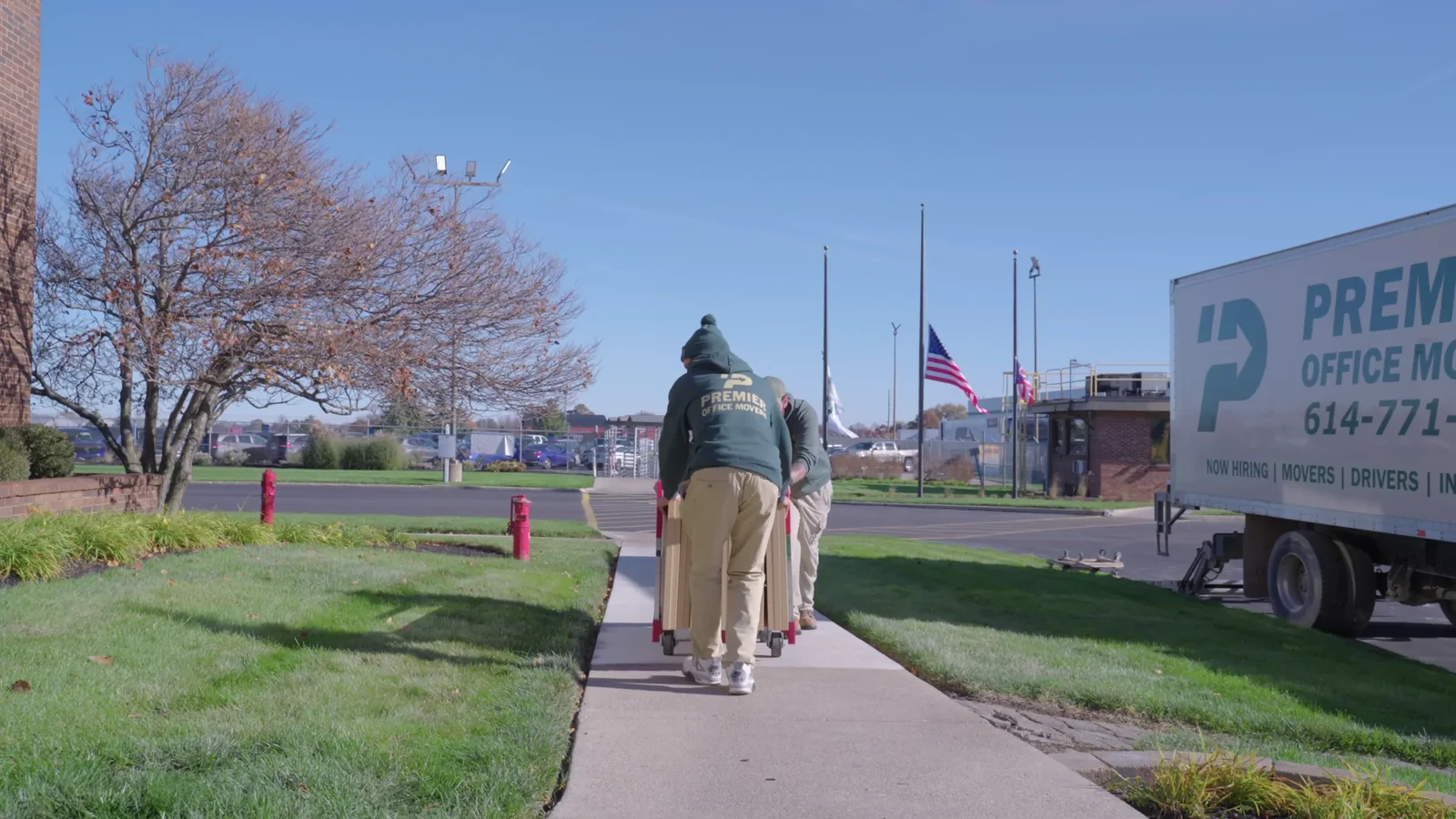
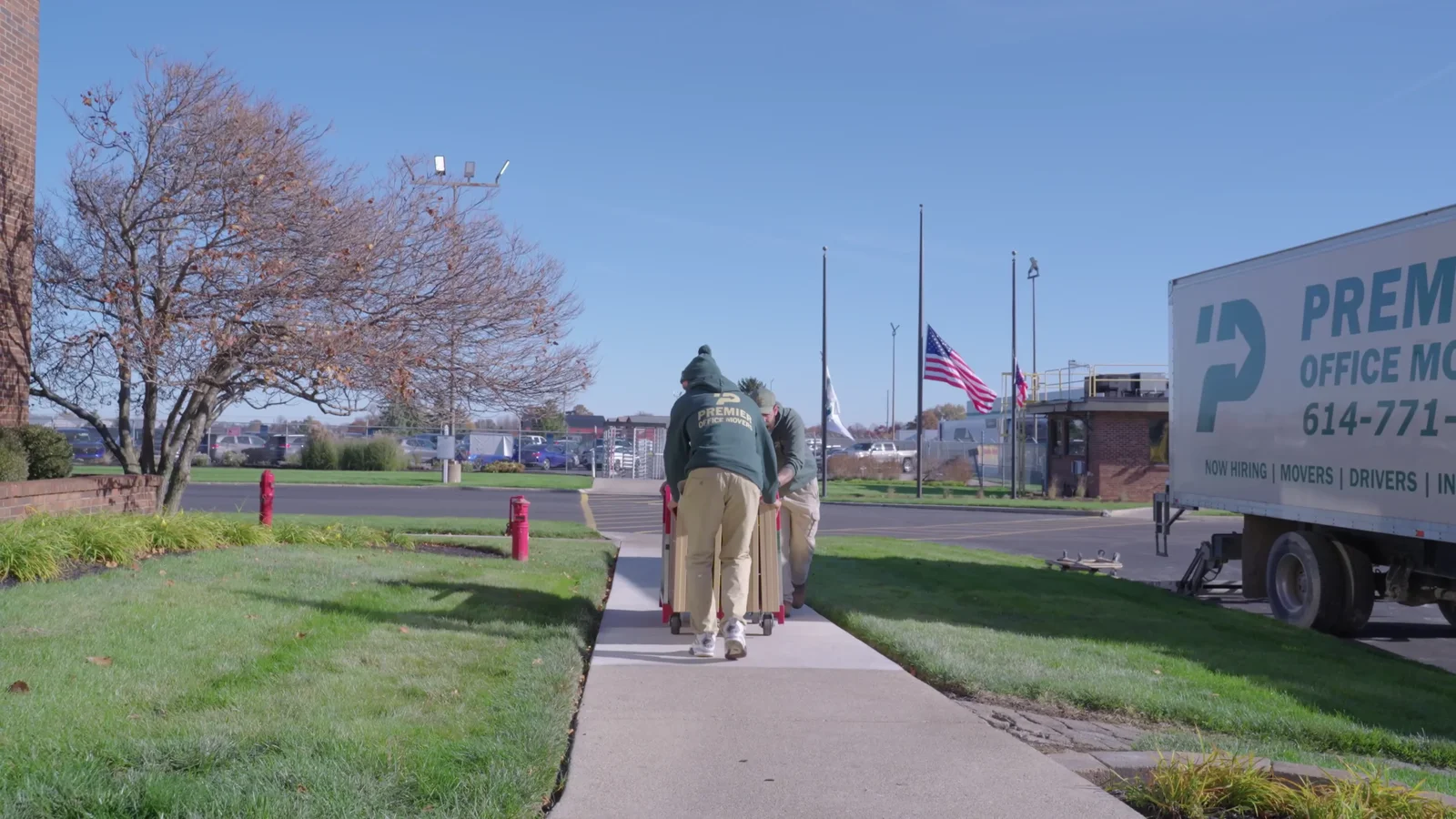
- Specialized equipment — e-crates, modular furniture tooling, IT transport carts, panel dollies, server rack lifts
- Project management for phased moves that span multiple weekends or coordinate with other trades (IT, furniture installers, AV vendors)
If a mover describes themselves as "commercial" but can't walk you through their pre-move process, their crew continuity, or their COI for your building, you're probably talking to a general mover with a commercial marketing page.
Which one do you actually need?
Here's a quick sort:
- Moving a home, apartment, or dorm → residential movers
- Moving warehouse inventory, industrial equipment, or a manufacturing line → commercial movers (industrial specialization)
- Moving an office, medical floor, bank branch, lab, university building, corporate HQ, or institutional campus → office movers (a specialized commercial category)
Most Columbus buyers asking "do I need commercial movers?" actually need office movers. If your move involves a lobby, a badge, a dock, modular furniture, or an IT closet, the answer is yes.
Why it matters in Columbus, OH
Central Ohio's building stock makes this distinction sharper than most markets. Downtown Columbus has strict after-hours dock windows. The hospital corridors around OSU Wexner, Nationwide Children's, and Mount Carmel are some of the most secured commercial environments in the region. Banks and insurance HQs across Easton, Polaris, and Worthington require COIs that residential carriers can't produce on short notice. And a stadium or convention relocation in the Arena District has to respect event blackout calendars that residential movers aren't built to track.
Local knowledge isn't a nice-to-have here — it's the job.
Picking the right partner
If your building has a loading dock, a freight elevator, or a front desk, you need a commercial office mover. From there, evaluate on the things that actually affect your move: crew consistency, insurance, walkthrough process, and whether you're talking to a human or a regional call center.
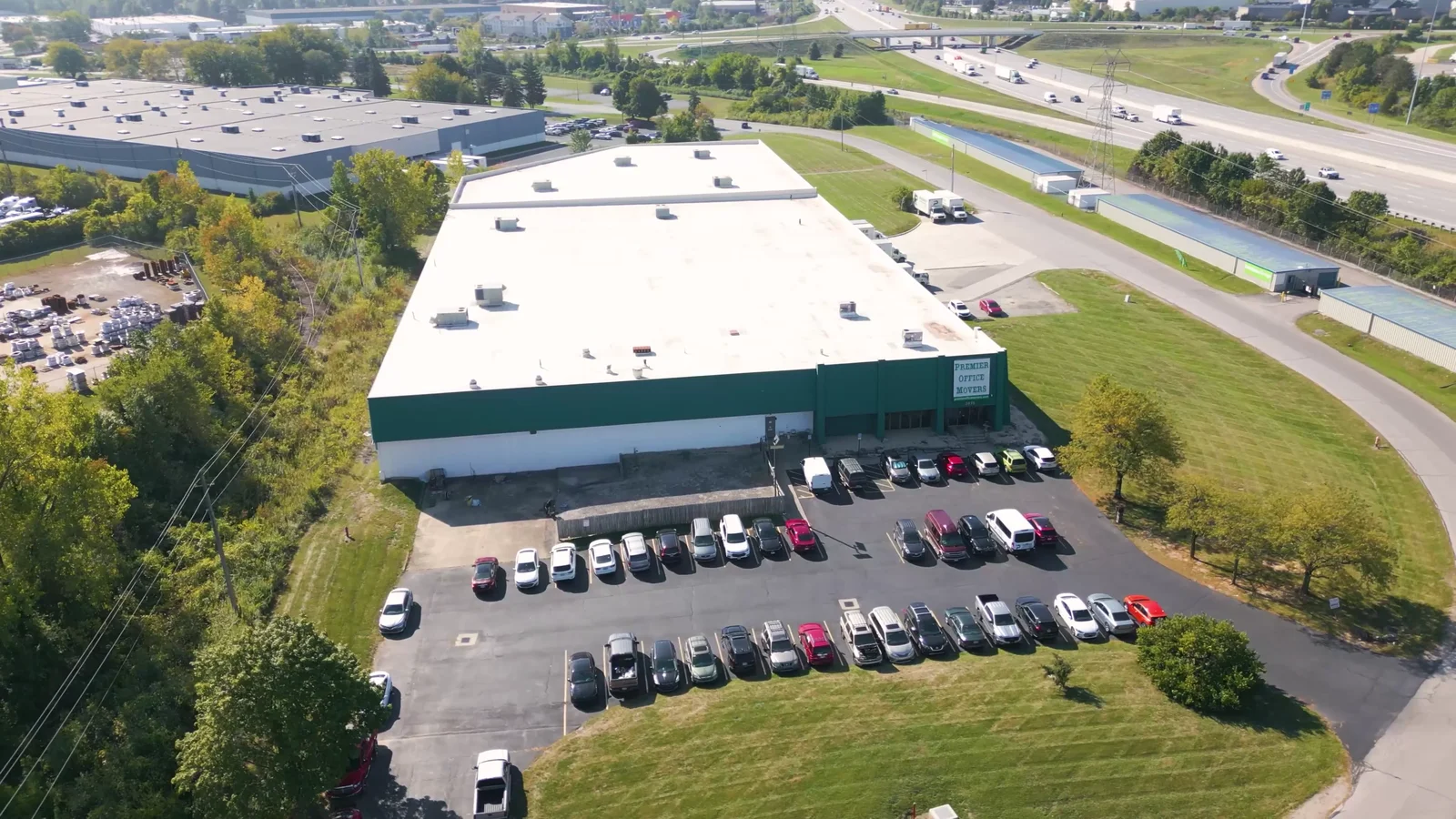
Schedule a walkthrough with Premier Office Movers — Columbus-based, office-focused, and available at the hours your move actually happens.